-(2).svg)
.svg)
This article aims to give electrical contractors a clearer idea of some of the additional competencies and knowledge needed to work within or near potentially explosive atmospheres.

What is a hazardous area?
According to the Dangerous Substances and Explosive Atmospheres Regulations 2002 (DSEAR), “an explosive atmosphere is defined as a mixture of dangerous substances with air, under atmospheric conditions, in the form of gases, vapours, mist or dust in which, after ignition has occurred, combustion spreads to the entire unburned mixture.”
BS EN IEC 60079 defines the term as “an area in which an explosive gas and/or a dust atmosphere is present or can be expected to be present, in quantities such that special precautions for the construction, installation and use of equipment are required.”
Would you recognise a hazardous area?
Some hazardous areas aren’t instantly recognisable. Do you know what is classed as a hazardous area? Do you ever work in one? And if you’ve previously worked in a hazardous area, did you understand the additional competencies and knowledge required?
Sometimes, electrical work needs be carried out in hazardous areas; if you work in, or near, these designated areas, you need to be aware of the hazards and risks present and have demonstrable knowledge, competence, and experience to design, install, and verify your work safely.
Where are these hazardous areas located?
Hazardous areas are defined areas in which potentially explosive products are processed, produced, transformed, stored, or transported. Hazardous areas can vary in size dependent on the installation being carried out, its design, and other factors.
Some well-known large-scale examples of hazardous areas include:
- oil refineries and terminals
- chemical plants
- alcohol distilleries
- gas plants
- paper mills.
These large hazardous plants are usually access-controlled to restrict unauthorised personnel entering the sites. There will probably be a gate and security office, and you will be vetted by the client before they permit access to their premises.
Other examples of hazardous areas that you’re more likely to come across on a day-to-day basis include:
- filling stations (petrol stations or garages), where fuel is stored and dispensed to the public, and where electric vehicles and EV charging equipment are present
- biodigesters, which transform organic waste into renewable energy sources and products
- bulk storage of Autogas/Liquid Petroleum Gas (LPG)/Propane
- portable cylinders, which are stored and dispensed for use in vehicles, domestic heating and cooking, and in the leisure industry.
Hazardous areas in industries that process, produce, or use combustible dusts include:
- sugar mills
- flour mills
- pharmaceutical plants (mixing powders)
- food industries (including bakeries)
- agricultural settings (grain, feeds)
- wood mills.
Some less obvious hazardous areas
Some hazardous areas may not be as clearly recognisable, perhaps due to familiarity or because the location contains smaller hazardous areas contained in a larger installation.
For example:
- specific areas within industrial and commercial premises due to storage or the process being carried out
- golf courses, park maintenance areas, council vehicle yards, private aerodromes – most of these store and dispense fuels of some kind
- gas meter rooms and cabinets – domestic, commercial and industrial
- domestic and commercial CHP installations using wood pellets that produce Syngas (a mixture of hydrogen, methane, and carbon monoxide)
- air source heat pumps, which use various refrigerants – these are sealed units under normal conditions, but you need to adhere to manufacturers’ instructions)
- forklift and battery charging areas
- paint spraying booths and storage
- agricultural – grain and animal feed processes
- micro-distilleries and micro-breweries.
None of the above lists of hazardous areas are exhaustive and, when you’re carrying out electrical work close to a hazardous area, you also need to consider whether your electrical work could affect the hazardous area itself.
If you’re asked to carry out electrical work in the retail shop at a filling station, for example, you need to ensure your work activities cannot adversely affect safety in the hazardous areas nearby (i.e., the filling station itself).
What legislation applies to hazardous areas?
Much of the applicable legislation for work in hazardous areas will be familiar to all electricians. Many of the requirements are the same as those you need to consider and comply with across your general electrical work. Key pieces of legislation include:
- The Health and Safety at Work Act 1974
- The Management of Health and Safety at Work Regulations 1999
- The Electricity at Work Regulations 1989.
For hazardous areas specifically, you also need to comply with the Dangerous Substances and Explosive Atmospheres Regulations 2002 (DSEAR) and apply the relevant standards (BS EN IEC 60079 series) and appropriate codes of practice and guidance.
Anyone carrying out electrical work needs to demonstrate competence and show they hold relevant experience, qualifications, training, and CPD records. For electrical work in hazardous areas, this includes having knowledge of, and applying and complying with, both BS 7671 and BS EN IEC 60079 requirements.
Designers of new installations or duty holders in existing premises are responsible for ensuring their installation is risk-assessed for the presence of hazardous areas (and then for acting on those findings) to ensure their installation is safe. They will have their own products and processes to define hazardous areas, and you must behave accordingly when carrying out any work in these areas to ensure your work is safely designed and installed in accordance with the site’s hazardous area drawings.
How is a hazardous area identified?
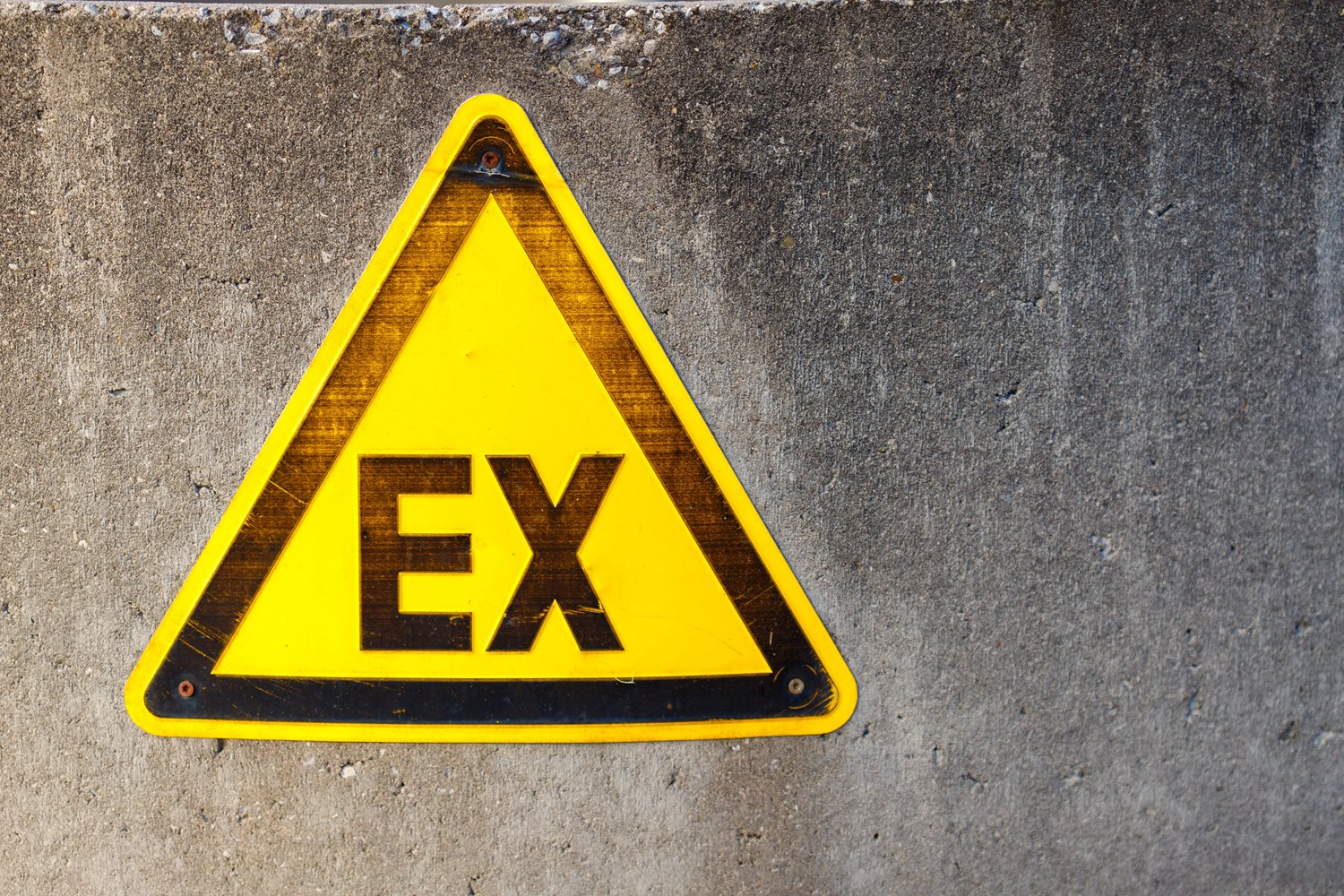
The designer or duty holder should document and identify the hazardous areas on a site with a triangular yellow ‘EX’ sign. These areas may then be further divided into specific zones according to the type of hazard, the likelihood an explosive atmosphere will occur, and how long it might last.
Hazardous area gas zones are classified into zones 0, 1, and 2, while hazardous areas containing combustible dust are classified into zones 20, 21, and 22. The category a hazardous area is classified into depends on the amount of time a potentially explosive atmosphere is likely to be present, with zone 0 and zone 20 being the most onerous.
A helpful way to think of it is in terms of Section 7 (Special Installations or Locations) of BS 7671, where there is a need for additional safety precautions and considerations in addition to compliance with the rest of BS 7671.
What is Ex equipment?
When you’re entering a hazardous area, you should see the ‘EX’ sign informing you that you’re entering an area that needs additional precautions.
Similarly, equipment in a hazardous area will be identified with an ‘Ex’ symbol (Ex in a hexagon) on its label. Ex equipment is engineered to ensure it’s safe for installation and use in specific hazardous areas. It’s manufactured, inspected, tested, and verified to high standards and issued with specific auditable Ex certification, as well as manufacturer’s instructions, to ensure it meets the necessary stringent safety requirements.

You may sometimes find yourself in an area that hasn’t been properly identified with an ‘EX’ sign or documented on a hazardous area drawing, perhaps because the client hasn’t properly recognised the area, or because of a change of use or other development. If this is the case, you may pick up on other signals or indicators, such as flammable products signage on products in the room, or Ex equipment in the area, all of which provide useful awareness-raising references.
Competence, experience and training
Ex equipment is designed to meet the requirements of the specific hazardous area, but the competence of the installer is critical. A competent person must ensure Ex equipment is installed correctly, in accordance with its hazardous area concepts of protection, manufacturer’s instructions, and the specific Ex equipment hazardous area certificate.
Incorrect installation (for example, drilling fixing holes, incorrect cable entry systems, or any unauthorised modification to the Ex equipment) will result in the Ex safety of the equipment becoming compromised, which could ignite a potentially explosive atmosphere.
As the electrician installing the equipment, you must have the competence to understand the specific installation requirements of Ex equipment. That’s because if you get it wrong, you’re putting yourself and others at risk. By their very nature, fires and explosions have the potential to cause major incidents, at the very least damaging goods and property, and at worst leading to serious injuries and death.
If you already work in hazardous areas, or are thinking about carrying out this specialist work, you may be interested in NICEIC’s third-party UKAS-accredited Hazardous Areas Scheme.
The NICEIC Hazardous Areas Scheme is available to businesses already registered on our NICEIC Approved Contractor scheme and wish to demonstrate they are competent to work in these potentially explosive environments.
More information
Catch up with our special episode of The Wire on hazardous areas on-demand to find out more about hazardous areas and how to recognise them.
Learn more about the benefits of third-party accreditation under our Hazardous Areas Scheme.





.jpg)