-(2).svg)
.svg)
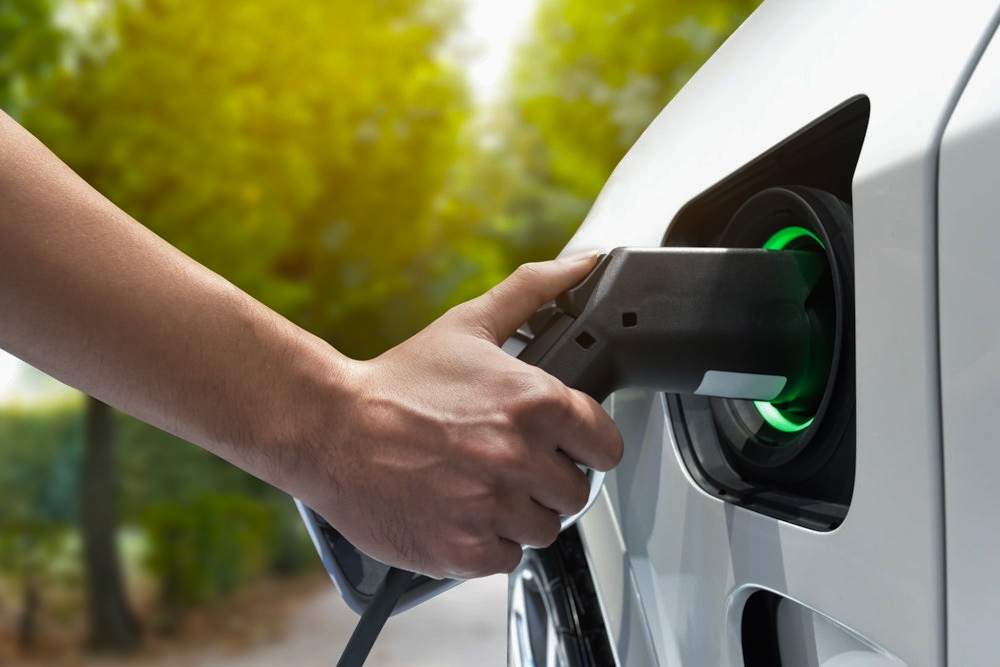
Over 1,800,000 fully electric vehicles are now present on UK roads, representing 5.5% of all vehicles. The market is continuing to grow, with almost 470,000 fully electric cars registered in 2025 – 91,378 more than in 2024.
On 16 July 2025, the government also introduced the Electric Car Grant (ECG). The ECG gives buyers up to £3,750 off an electric vehicle priced at or under £37,000, giving drivers more of an incentive to purchase one.
If you’re reading this article, you may be interested in learning more about the process of having an EV charger installed. Our EV charging experts are here to take you through the basics of EV charger installation, including considerations when getting one installed at your property.
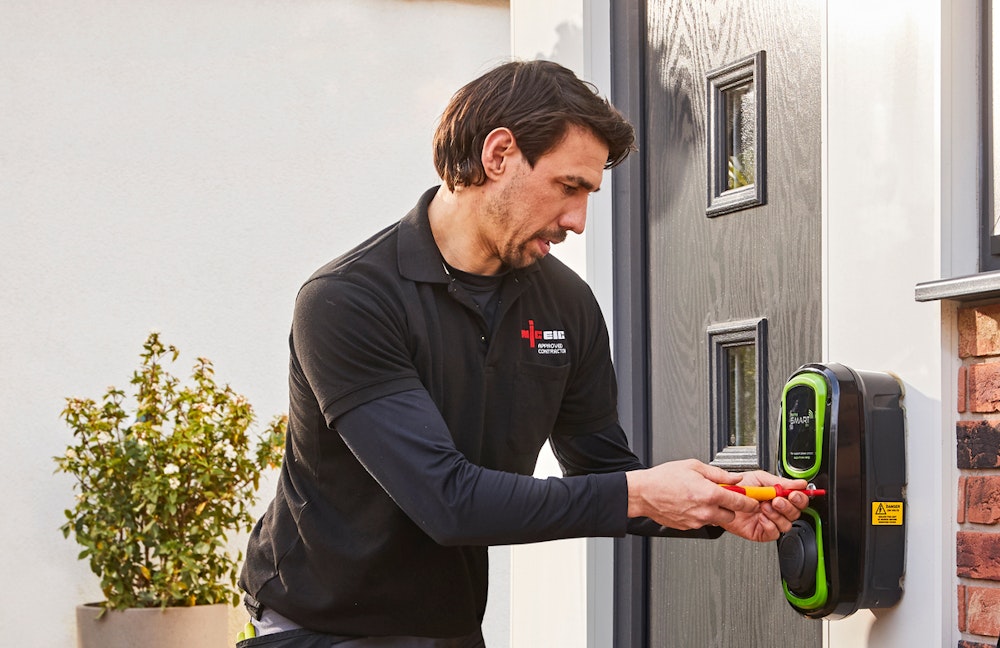
Types of EV chargers
Two main types of EV chargers are available in the UK.
1. Home EV chargers
First is the standard home charging point, which offers a cheap and convenient way to charge your car at home.
Home EV chargers are small, waterproof devices that are usually installed on the exterior of your home or garage. They will either have a charging cable attached or a socket-outlet where you can plug in a portable cable.
2. Public EV charging points
A network of 120,000 public EV chargers now extends across the UK. This number is increasing all the time, making it much easier to charge your electric car on the go.
There are three main types of public EV chargers.
1. En-route charging points
These charging points help you power up your car on longer journeys and are often found in petrol station-like hubs designed to cater especially to electric vehicles.
2. Destination charging points
You might find destination charging points at the supermarket, at the garden centre or even down your local pub, allowing you to charge your car while doing the weekly shop or enjoying a Sunday roast!
3. On-street charging points
These charging points allow residents of flats or houses without a driveway or off-street parking to charge their vehicle at home.
EV charger installation cost
When weighing up the costs of installing an EV charger, there are two main costs to consider. First is the cost of installing an EV charging station, and second is the cost of charging your car.
The cost of installation will depend on several considerations, including the charging station model, charging speed, and your electrician’s fees to install it.
How much it costs to charge your electric car will again depend on a wide variety of factors, including:
- Where you charge it – electric vehicle charging at home is likely to be cheaper than at a public EV station.
- Which public charging station you use – just as with any petrol station, some EV charging points will be more expensive to use than others. Some are even free, although this is sadly quite rare.
- Your electricity tariff – the exact cost to charge your car at home will depend on your electricity tariff. Some energy providers offer smart charging tariffs that make it cheaper to use electricity at night, or at times of low electricity demand, making it even more cost-effective to charge up at home.
- The size of your car’s battery – just like some petrol vehicles have bigger tanks than others, electric cars have different sized batteries. The size of your car’s battery will determine how much electricity it needs to fully charge, and therefore how much a full charge costs.
- Rapid or ultra-fast charging – these charging points often cost more than regular speed chargers.
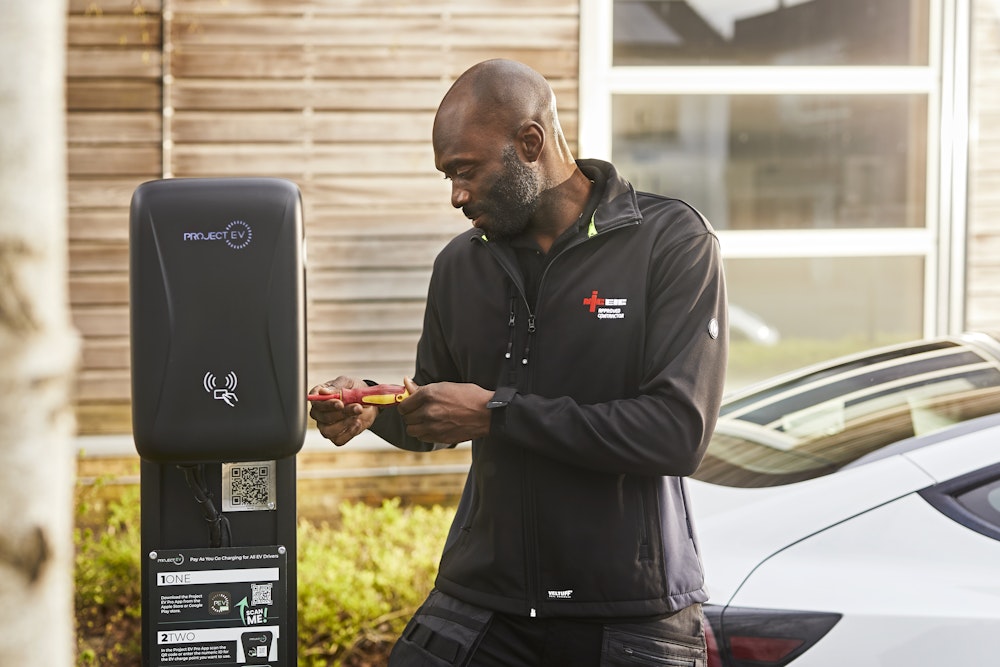
Government grants for EV chargers
Some EV chargepoint grants are available for certain homeowners or renters seeking financial assistance with installing an EV charger.
1. For renters and flat owners
If you own or rent a flat with its own dedicated off-street parking space, you may be able to get £350 or 75% off the cost of installing an electric car charger (whichever is lower) via the Office of Zero Emission Vehicles (OZEV).
To be eligible, you must use or own a vehicle on OZEV’s list of approved vehicles and have your EV charging point installed by an OZEV-approved installer.
2. For households with on-street parking
This gives householders without their own private parking spot (for example, individuals living in terraced housing with on-street parking) £350 or 75% off the cost of installing a cross-pavement charging solution (whichever is lower).
To be eligible, you must use or own a vehicle on OZEV’s list of approved vehicles and have your EV charging point installed by an OZEV-authorised installer. You must also have permission from your local highways authority and obtain all necessary planning permissions.
Grants are also available for businesses, landlords, and educational establishments. You can find a full list of available grants on the government website.
Requirements for EV charger installation
Your EV charger must be installed in line with the current edition of BS 7671, the national standard for electrical installations.
To ensure a compliant and safe installation, make sure you hire an electrician registered with a recognised certification body, like NICEIC.
All NICEIC-registered electricians are regularly assessed to ensure they continue to maintain high standards of competence and skill. They will be able to explain all the EV charger requirements relating to your home or property.
Do you need planning permission to install an EV charger?
Usually, you don’t need planning permission to install an EV charger at your property because it falls within permitted development rights. Some exceptions do exist, for example if you live in a listed building or conservation area, or you’re looking to install a cross-pavement solution.
You do, however, need to notify the work to your local authority’s Building Control, which you must do 48 hours in advance of the work starting.
This is unless your electrician is registered on a Competent Person Scheme like NICEIC’s. These electricians are deemed competent to self-certify their own work, saving householders time and money.
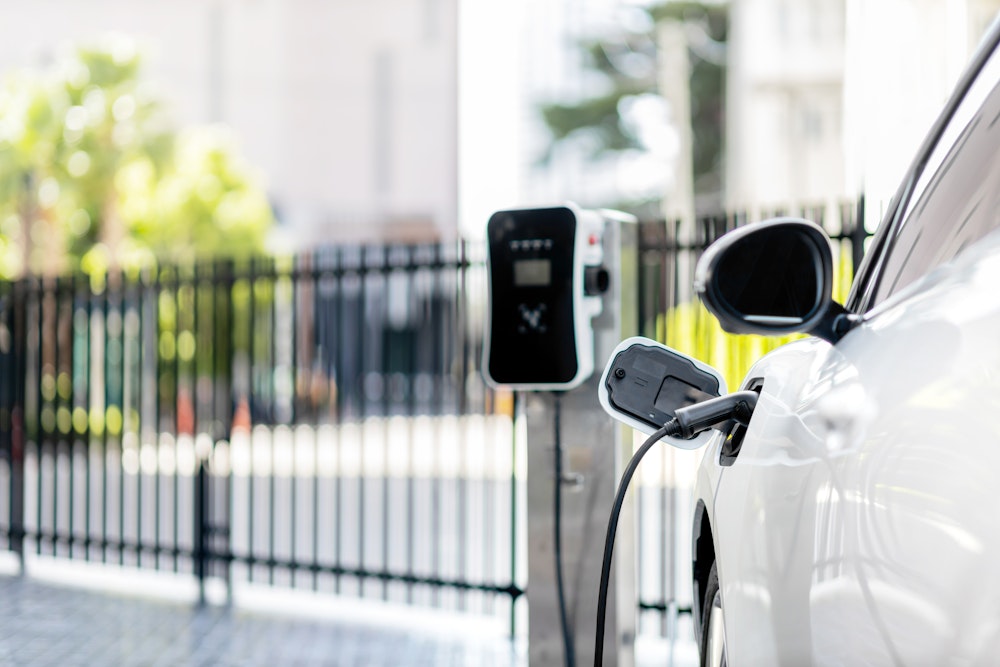
Choosing the right EV charger for your needs
When choosing the right EV charger type for your needs, there are a few factors to consider:
1. Charging speed – some EV chargers are faster than others, which can have an impact on the installation price. The three broad speed categories are:
- Home chargers – these tend to be slower, usually around 7kW. This is perfect for charging your car overnight.
- Destination chargers – usually range between 7kW and 22kW. These will usually deliver a full charge in anywhere between 15/20 minutes to a few hours.
- Rapid/ultra rapid chargers – up to 350kW. These can fully charge a vehicle in minutes.
2. Connector type – EV chargers come with a range of different connectors that plug into your car. Your electrician will let you know what type of connector will be compatible with your vehicle.
3. Tethered or untethered – tethered EV chargers come with a cable and connector installed, while untethered chargers just have a socket where a cable can be plugged in. Untethered EV chargers can be useful if you regularly charge on the go, as you can keep your cable and connector in your car and use them at untethered public charging points. If you only ever charge your car at home (or lose or misplace things easily!), a tethered charger might be more suitable.
Do you need a professional to install an electric car charger?
Absolutely. An EV charger must be installed in line with British Standards, such as BS 7671 and building regulations – it is not a DIY job.
A professional electrician, such as one registered with NICEIC, will have the knowledge and skills to install your EV charger safely and in full compliance with all the relevant standards.
Yes, subject to permission from your local authority, if you live in a property with on-street parking, there is an EV charging solution called a cross-pavement charger. This involves trailing a cable from your property below the pavement to eliminate trip hazards and enable you to charge your car on the street.
You might also be eligible for a government grant when installing a cross-pavement EV charger.
This is a difficult one to answer as EV charger installation costs depend on a wide range of factors, including:
- Charging speed – chargers offering faster speeds are often more expensive.
- Tethered vs untethered – an untethered EV charging station will likely cost less as you're not paying for the cable and connector.
- Installation complexity – a complicated cross-pavement solution might be more costly to install than a simple driveway EV charger, for example.
- Grants and incentives – if you’re eligible for a government grant, your installation will be less expensive than it would otherwise have been.
You can use NICEIC's Find a Trusted Tradesperson tool to submit your EV charging installation job to multiple NICEIC-registered electricians in your area, enabling you to gather a few different quotes and get a price that works for you.
If your electric car charger is broken, please do not try to repair it yourself. This is a job for a professional electrician with the qualifications and certifications to get the job done compliantly and safely.
How easy the issue is to fix completely depends on the reason why your charger is no longer working. An NICEIC-registered electrician will be able to assess the fault and assist you with a repair or replacement to get you moving again.
All information shared is correct as of August 2025.