-(2).svg)
.svg)
In our 'NICEIC in action’ series, we celebrate NICEIC-certified businesses tackling innovative, interesting and technically challenging installations up and down the UK.

In this case study, we look at a recent project completed by Energetics, an NICEIC-certified business based in Scotland. In a drive to create a sustainable and low-cost way of providing heading and hot water, the Scottish company completed the installation of its first ambient heat network (ANH) in 2025.
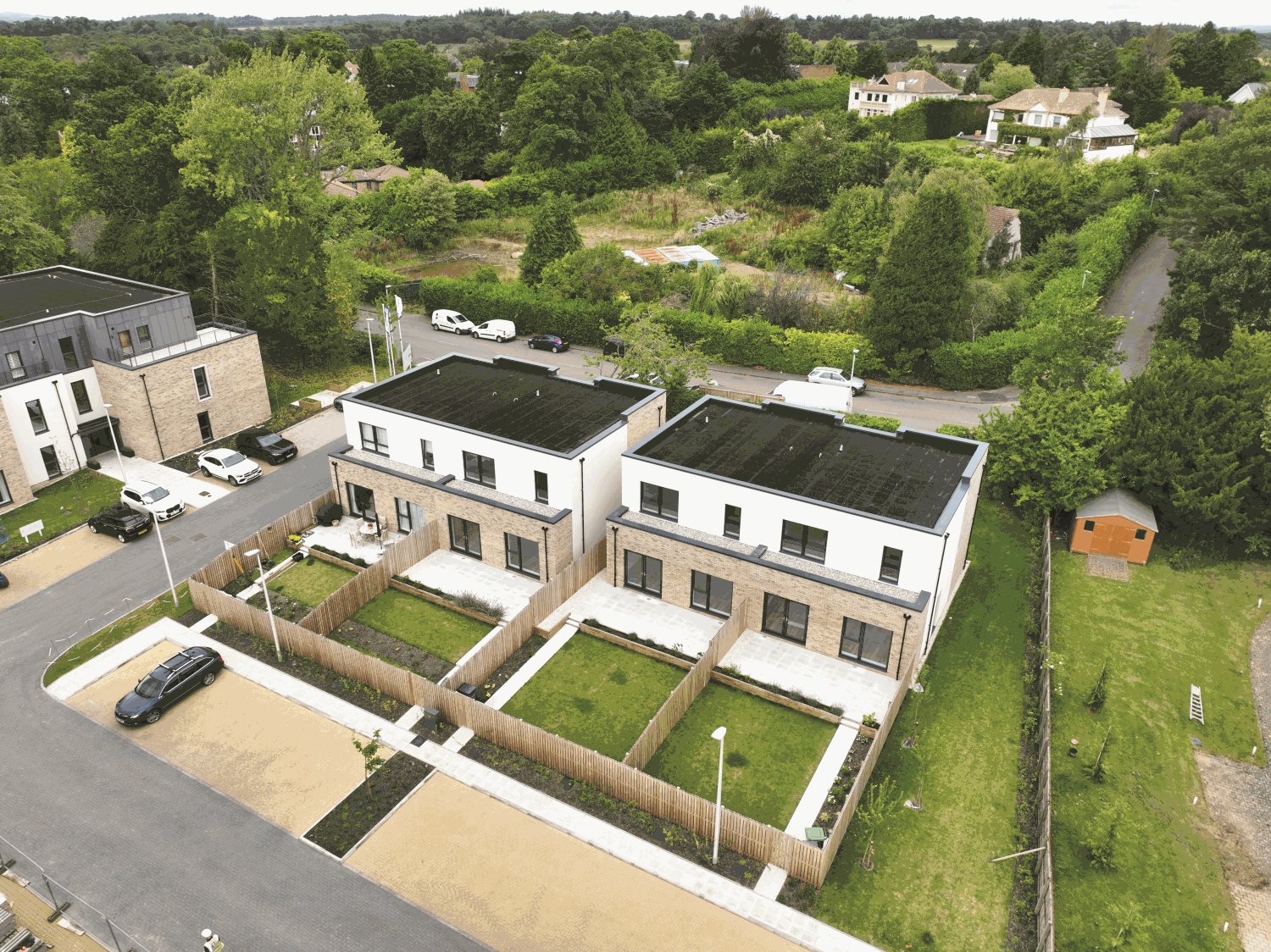
Part of the Last Mile group of multi-utility infrastructure companies, Energetics recommended, installed, and commissioned the network for 48 homes at a retirement living complex called The Avenue in Barnton, near Edinburgh.
Unlike ground-source heat networks, which use centralised bore holes and a single heat pump to produce heating and hot water for multiple dwellings, AHN uses decentralised arrays as the ambient energy source, with heat pumps in each property to generate the heating and hot water.
Energetics was appointed by developer Cruden Homes in June 2022 after a tendering process. “At the early design stage, we had lots of technical meetings,” says David McInarlin, Head of Construction at Energetics. “We knew gas boilers for new build residential developments wouldn’t be allowed in Scotland from January 2025 under the New Build Heat Standard. In response, we’ve been researching and developing an alternative renewable means of heating that would meet building regulations beyond 2025.”

According to McInarlin, air-source heat pumps had been considered for this project. However, following demonstrations, calculations, and reliability aspects for the end user, an AHN that utilises ground-source heat pumps was selected instead. This solution will result in 80% lower carbon emissions compared to traditional gas-fired heating, and 54% lower emissions than air-source technology. Before this could be executed, 18 vertical boreholes were drilled at the site, each borehole approximately 160m deep. A network of pipes, manifolds and valves distributes the ambient heat from the boreholes to the heat pump units, which provide space and water heating to each home.
Energetics’ brief also involved redistributing electricity from the existing Scottish Power network via a new substation, enabling a low-voltage network to be run to each dwelling. Cruden Homes built the substation’s brick enclosure and Energetics installed the transformer and apparatus.
“First, we connected the 11,000-volt supply from the existing Scottish Power network to the substation,” says McInarlin. “The substation contains a transformer that steps down the 11,000 volts to a three-phase 400-volt site-wide network. From that, we installed individual services to each plot supplying single-phase electricity at 230 volts, which in turn powers the heat pumps.”
Cruden Homes built the shell of the buildings, comprising eight houses and 40 apartments. Their electrical contractor, NICEIC-certified CableCom Electrical, was responsible for both the first and second fix cabling. CableCom also installed consumer units in each dwelling alongside an isolator switch for the heat pumps. Energetics then fitted the ground-source heat pumps inside each of the properties.
McInarlin says that the project had its challenges, particularly when the site flooded at the beginning of construction. But since the users moved into their homes, he says, they’ve been complimentary about the system.
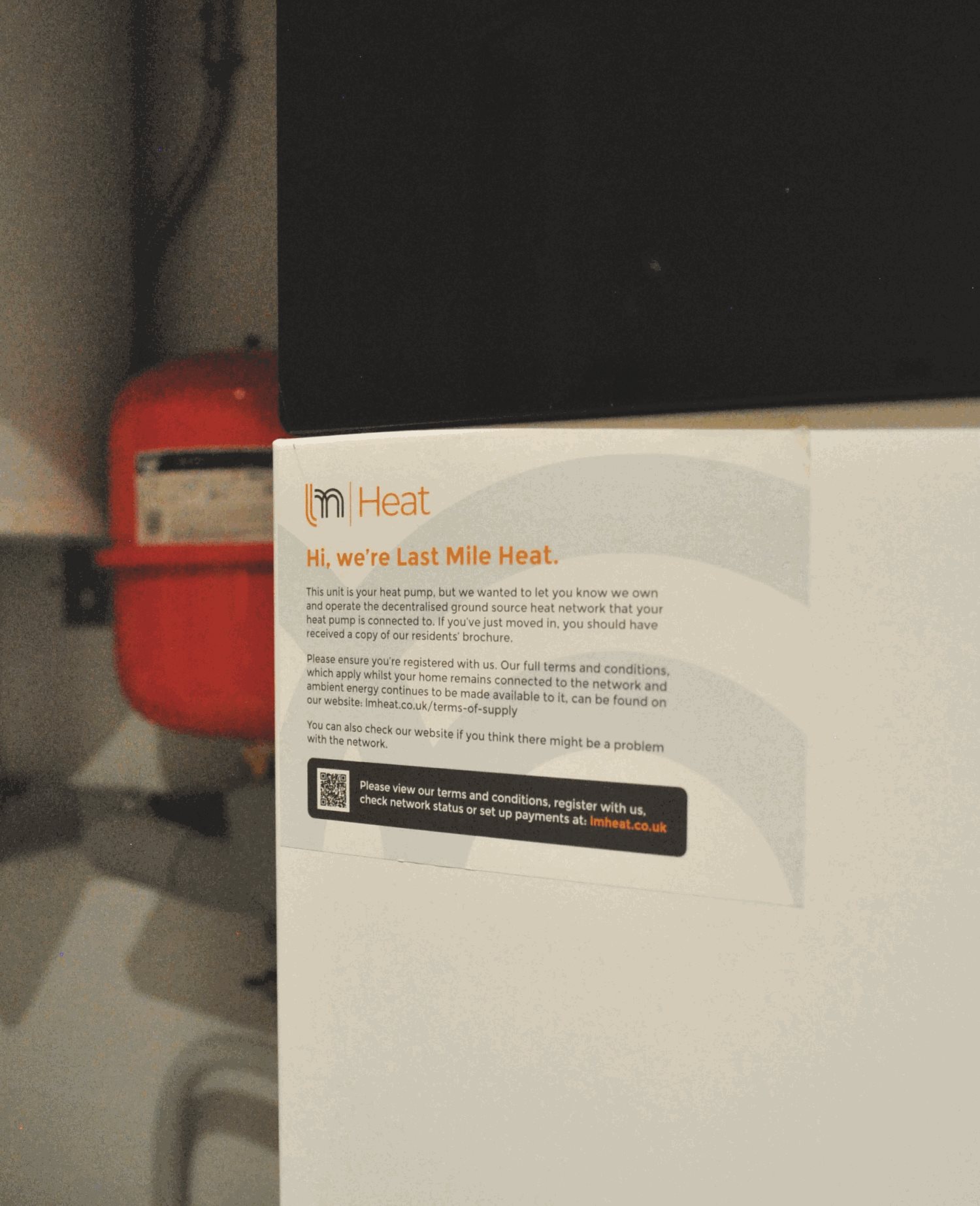
“They’re appreciative of the cost savings, the heat that’s given out and the fixed tariff that comes with it. This means they can budget and they know what their electricity bills will be every month,” he says. “The system only converts the heat that’s needed. The heat keeps circulating until the system is overridden either by the thermostat or the user; it’s not constantly using electricity.”
In an innovative move, Energetics supported the development by providing Last Mile’s finance or “asset value” model, which was developed at the tender stage to fund the capital cost of the heat network. Cruden Homes knew they couldn’t install gas and were ready to embrace a new renewable technology like AHN; however, they were concerned about the upfront cost of installing a heat network. With this arrangement, underpinned by Last Mile’s blue-chip investors, they’ve benefited from a sizeable capital cost saving. Last Mile will own, operate, and maintain the heat network across its lifetime, and provides a 24-hour call service for each property owner.
“It’s a huge commitment from our business. We were invested in ensuring the system was tendered properly, designed, installed, commissioned, and maintained properly. If anything happens to the AHN network, it’s our responsibility – and our cost – to rectify,” says McInarlin.
He agrees that AHN is in its infancy; however, he says that the technology is becoming increasingly common. He adds that there’s been a great deal of interest from other housing developers who have visited the site to see the AHN in operation, with some signing contracts employing AHN on a much larger scale. Energetics already has several Scottish projects specifying AHN and the Last Mile group is currently installing the UK’s largest AHN at a mixed-use development in Welborne, Hampshire, which will ultimately supply up to 6,000 homes.
“As it’s a new technology, we need education, alternative sequencing of works, adjusted timescales, new logistics, and a change in the way the industry operates,” says McInarlin.
“But you learn from the experience and move on. The other key takeaways from this project include early engagement, regular interface and collaboration between everyone, and that’s critical to success.”




"We’ve been researching and developing an alternative renewable means of heating to gas that would meet building regulations beyond 2025."
David McInarlin, Head of Construction, Energetics